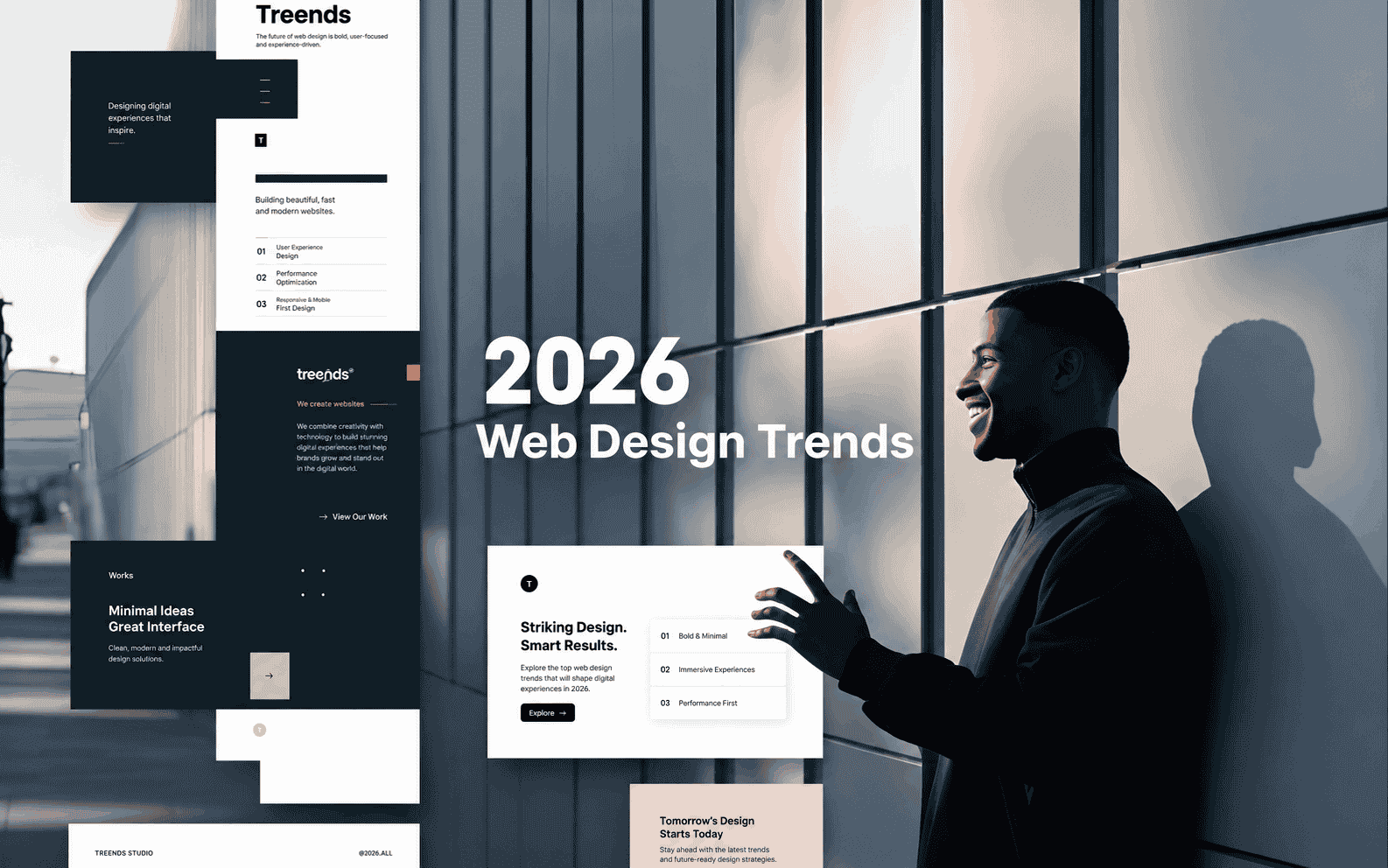
The web design industry is evolving faster than ever. In 2026, businesses are no longer competing only on products or services — they are competing on digital experience. A modern, fast, visually engaging, and user-friendly website can directly impact conversions, SEO rankings, and customer trust.
From AI-powered personalization to immersive scrolling experiences, the latest web design trends are focused on creating smarter and more human-centered digital experiences. Whether you run a startup, eCommerce store, portfolio website, or enterprise platform, staying updated with modern design trends can help your brand stand out in a crowded market.
If you are planning a website redesign or launching a new business website, understanding these trends can help you make better long-term decisions.
You can also explore professional web solutions from CodeRender Technology for modern, scalable, and SEO-friendly website development services.
Key Highlights
- AI-powered web experiences are becoming mainstream
- Minimalist UI with bold typography continues to dominate
- Interactive and immersive scrolling improves engagement
- Dark mode and adaptive themes are now standard expectations
- Performance-first design is critical for SEO and conversions
- Mobile-first experiences remain more important than desktop
- Accessibility and inclusive design are now essential
- Motion design and micro-interactions enhance user engagement
- Headless CMS and modern frameworks are reshaping development
- Sustainability-focused web design is gaining popularity
Why Web Design Trends Matter in 2026
A website is often the first impression users have of your business. Design trends are not just about aesthetics anymore — they directly affect:
- User experience
- SEO performance
- Conversion rates
- Brand trust
- Bounce rates
- Mobile usability
- Accessibility compliance
Modern users expect websites to load instantly, adapt perfectly across devices, and provide seamless navigation. Businesses using outdated designs often lose potential customers before they even explore the services.
If your website still looks like it was built years ago, it may be time to consider a redesign through professional services like Web Design and Development Services.
1. AI-Powered Personalization
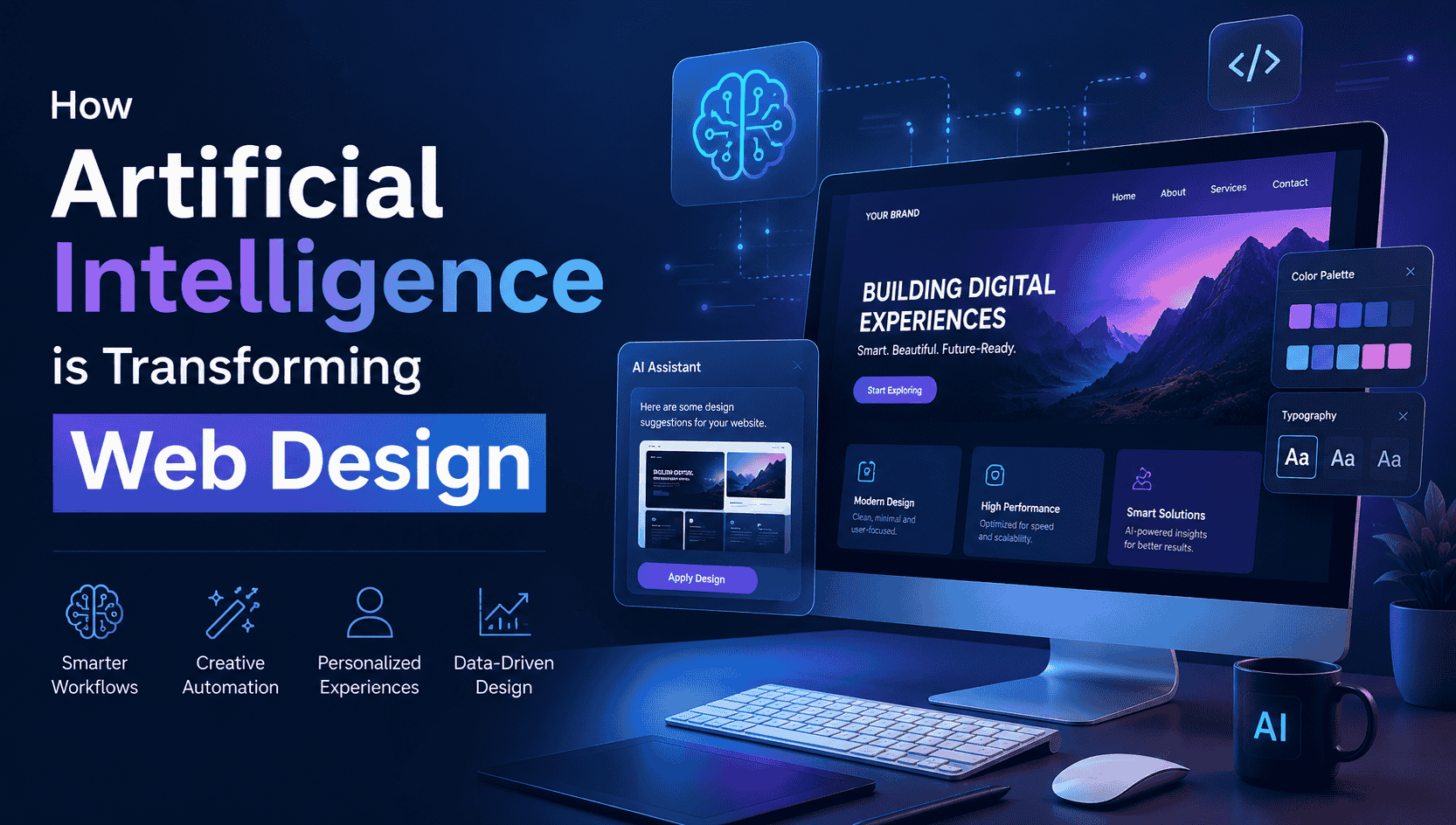
Artificial Intelligence is transforming website experiences in 2026. Instead of showing the same content to every visitor, modern websites dynamically personalize content based on user behavior, interests, and browsing patterns.
Examples of AI in Web Design
- Personalized homepage sections
- AI chat assistants
- Smart product recommendations
- Dynamic CTAs
- Predictive search
- Automated customer support
AI-powered personalization improves engagement and conversion rates because users see content that matches their interests.
Businesses are increasingly integrating AI into custom applications and websites using technologies like Python and React. Services like Custom Application Development and Python Application Development are becoming highly valuable for AI-driven solutions.
2. Minimalist Design with Bold Typography
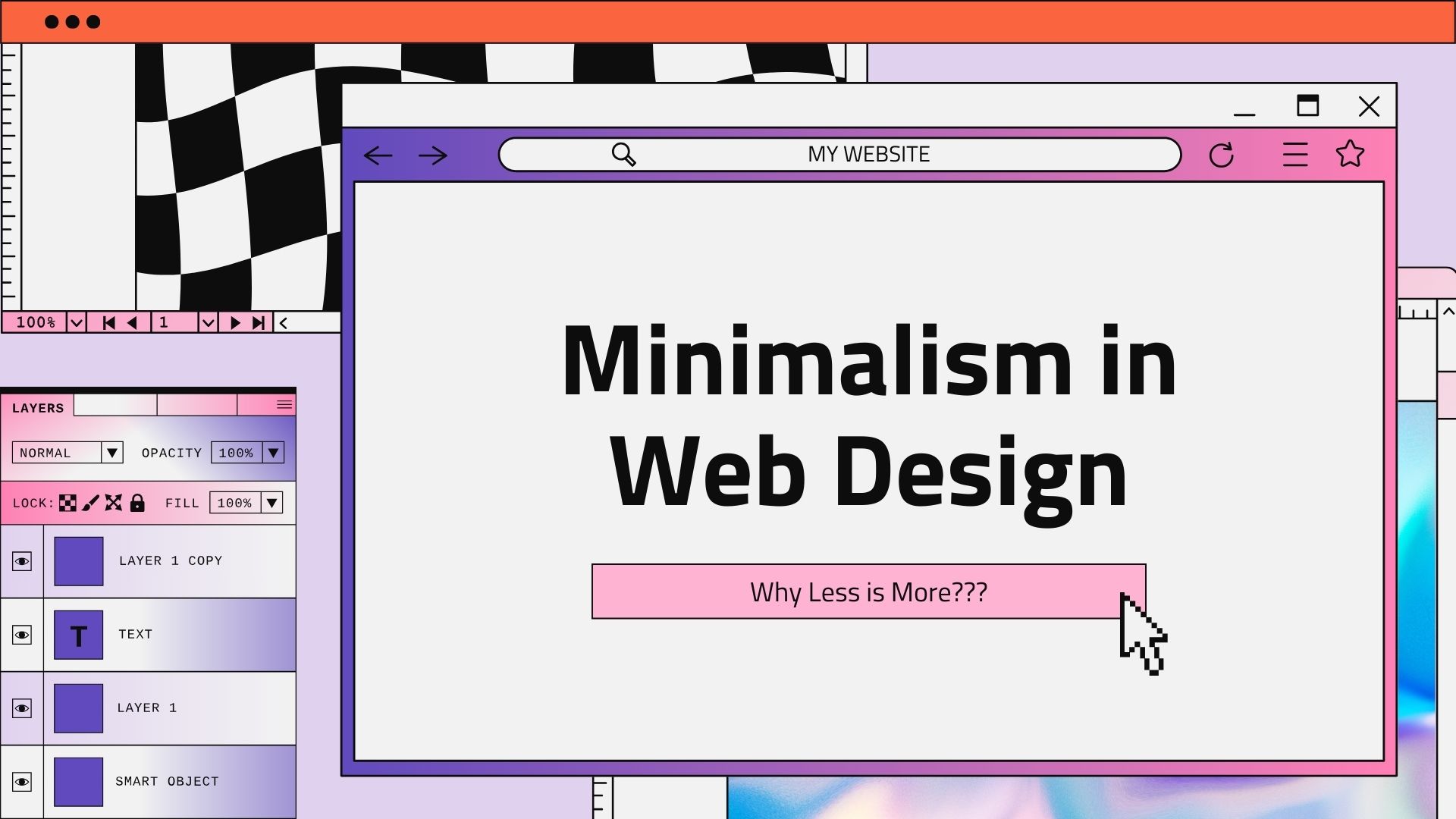
Minimalism remains one of the strongest trends in 2026, but now it is combined with bold and expressive typography.
Modern websites are focusing on:
- Clean layouts
- More whitespace
- Larger headlines
- Simpler navigation
- Reduced clutter
- Focused messaging
This approach improves readability and helps users quickly understand the purpose of the website.
Why Minimalism Works
Minimal design improves:
- Loading speed
- User focus
- Accessibility
- Mobile experience
- SEO performance
Users are overwhelmed with information online. Clean interfaces help reduce distractions and improve engagement.
3. Immersive Scrolling Experiences
Scrolling is no longer just a way to move through content. In 2026, websites are turning scrolling into an interactive storytelling experience.
Popular Scrolling Trends
- Parallax scrolling
- Horizontal scrolling sections
- Animated transitions
- Scroll-triggered effects
- Interactive storytelling
- Layered motion effects
These experiences keep users engaged longer and create memorable brand interactions.
However, balance is important. Overusing animations can slow down the website and negatively impact usability.
Businesses wanting immersive UI experiences often combine strong UI/UX strategies with advanced frontend technologies like React. Explore modern solutions through UI/UX Design Services and React JS Application Development.
4. Dark Mode and Adaptive Themes
Dark mode is no longer optional. Many users now expect websites to support light and dark themes automatically.
Benefits of Dark Mode
- Reduced eye strain
- Better readability in low light
- Modern visual appearance
- Improved battery efficiency on OLED devices
Adaptive themes automatically adjust based on:
- Device settings
- Time of day
- User preferences
This creates a more personalized browsing experience.
5. Performance-First Web Design
Website speed has become one of the most important ranking and conversion factors.
In 2026, businesses are prioritizing:
- Core Web Vitals
- Lightweight design
- Faster hosting
- Optimized images
- Minimal scripts
- Efficient code architecture
Even a one-second delay can significantly impact conversions.
Key Performance Practices
Image Optimization
Modern formats like WebP and AVIF reduce file sizes while maintaining quality.
Lazy Loading
Content loads only when needed, improving initial page speed.
CDN Integration
Content Delivery Networks improve global loading speed.
Optimized Hosting
Reliable hosting infrastructure is essential for performance.
If you need scalable website performance optimization, solutions like WordPress Development Services and QA Testing Services can help ensure smooth performance across devices.
6. Mobile-First Design is Still Essential
More than half of global web traffic comes from mobile devices. In many industries, mobile traffic exceeds 80%.
In 2026, mobile-first design means:
- Designing for smaller screens first
- Prioritizing touch interactions
- Faster mobile loading
- Thumb-friendly navigation
- Responsive layouts
Google also primarily uses mobile-first indexing, making mobile optimization critical for SEO.
7. Accessibility and Inclusive Design
Accessibility is becoming a standard requirement instead of a niche consideration.
Modern websites now focus on:
- Proper color contrast
- Keyboard navigation
- Screen reader compatibility
- Readable typography
- Accessible forms
- Alternative image text
Accessible websites improve usability for everyone, not just users with disabilities.
Why Accessibility Matters
Benefits include:
- Better SEO
- Wider audience reach
- Improved usability
- Legal compliance
- Stronger brand reputation
Inclusive design is now part of professional web development best practices.
8. Micro-Interactions and Motion Design
Micro-interactions are subtle animations that respond to user actions.
Examples include:
- Button hover effects
- Animated icons
- Loading animations
- Form feedback
- Scroll animations
- Interactive menus
These small design details improve user engagement and make websites feel more responsive and modern.
The key is subtlety. Overly aggressive animations can become distracting.
9. AI Chatbots and Conversational Interfaces
AI chatbots have become far more advanced in 2026. Businesses are integrating conversational interfaces directly into websites for:
- Lead generation
- Customer support
- Appointment booking
- Product recommendations
- FAQ automation
Modern AI assistants can provide near-human interactions and significantly improve customer response times.
Businesses combining AI with customer engagement strategies often integrate solutions with digital marketing efforts using services like Digital Marketing and SEO Services.
10. Advanced UI/UX Focus
Modern websites are increasingly focused on emotional user experiences instead of only functionality.
UX Priorities in 2026
- Simplified user journeys
- Faster interactions
- Personalized experiences
- Frictionless checkout
- Smart navigation
- Predictive design
Businesses are investing heavily in UX because better experiences directly improve conversions.
Professional UI/UX strategy is now essential for both websites and mobile apps. Explore modern experience-focused solutions through Mobile App Development Services.
11. Voice Search Optimization
Voice search continues to grow with smart devices and AI assistants.
Websites are now optimizing for:
- Conversational keywords
- FAQ-based content
- Natural language search
- Faster mobile performance
Voice-friendly websites improve visibility in modern search environments.
12. Sustainable and Eco-Friendly Web Design
Sustainable web design is becoming a major trend in 2026.
Eco-Friendly Web Practices
- Lightweight websites
- Reduced server usage
- Efficient coding
- Optimized assets
- Green hosting providers
Smaller websites consume less energy and provide faster user experiences.
Brands focusing on sustainability often use minimalist designs and optimized development practices.
13. Headless CMS and Modern Frameworks
Traditional CMS systems are evolving rapidly.
Many businesses now prefer:
- Headless CMS
- Jamstack architecture
- API-driven content
- React-based frontend frameworks
These modern architectures provide:
- Better scalability
- Improved performance
- Enhanced security
- Faster user experiences
Modern frontend development solutions like React JS Application Development are becoming increasingly popular for scalable applications.
14. Video-Driven Web Experiences
Video content is dominating user engagement.
Popular trends include:
- Background videos
- Short explainer videos
- Interactive video content
- Product demos
- Animated storytelling
Video improves engagement and helps businesses communicate complex information quickly.
Businesses often combine professional web design with creative services like Graphics Design and Animation Services.
15. Advanced eCommerce Experiences
eCommerce design trends in 2026 focus heavily on user convenience and personalization.
Key eCommerce Trends
- AI product recommendations
- One-click checkout
- Augmented Reality previews
- Personalized shopping experiences
- Faster payment methods
- Voice-assisted shopping
Online stores are increasingly focused on frictionless experiences.
Businesses planning modern online stores can explore solutions like eCommerce Application Development and Shopify Website Development.
16. Hyper-Personalized Landing Pages
Landing pages are becoming smarter with:
- Dynamic content
- User-based personalization
- Geo-targeted offers
- Industry-specific messaging
Personalized landing pages improve lead generation and conversion performance.
17. Security-Centered Design
Users are increasingly aware of online security risks.
Modern websites now prioritize:
- HTTPS security
- Secure authentication
- Privacy transparency
- Secure payment gateways
- GDPR compliance
Trust signals have become a critical part of web design.
18. Data-Driven Design Decisions
Businesses are using analytics and behavioral data to optimize website designs continuously.
Popular methods include:
- Heatmaps
- User recordings
- A/B testing
- Scroll tracking
- Funnel analysis
Instead of guessing, companies are using real user behavior to improve website performance.
How Businesses Can Prepare for 2026 Web Design Trends
Audit Your Current Website
Review:
- Speed
- Mobile responsiveness
- Accessibility
- SEO structure
- Conversion performance
- UI consistency
Focus on User Experience
User experience should always be the top priority.
Invest in Scalable Technologies
Choose frameworks and platforms that can grow with your business.
Improve SEO and Performance Together
Modern SEO depends heavily on user experience and speed.
Work with Professional Designers and Developers
A professional web team can help you implement modern trends without sacrificing usability.
You can learn more about scalable development solutions and pricing through Website Development Plans and Professional Web Development Services.
Common Mistakes to Avoid
Overusing Animations
Too many effects can hurt usability and performance.
Ignoring Mobile Users
Mobile optimization is essential.
Prioritizing Style Over Functionality
Beautiful websites still need clear navigation and fast loading.
Using Outdated Design Elements
Old layouts can reduce trust and conversions.
Neglecting SEO
Design and SEO should work together.
Future of Web Design Beyond 2026
The future of web design is likely to include:
- AI-generated interfaces
- Fully voice-controlled navigation
- AR and VR web experiences
- More immersive 3D interactions
- Advanced personalization engines
- Emotion-aware UI systems
Businesses that adapt early will gain a competitive advantage.
Conclusion
Web design in 2026 is focused on creating faster, smarter, and more personalized digital experiences. Modern users expect websites that are visually engaging, mobile-friendly, accessible, and highly responsive.
The best websites are no longer just attractive — they are strategic business tools designed to improve engagement, conversions, and customer trust.
Whether you are redesigning an existing website or building a new platform, staying updated with modern web design trends can help your business remain competitive in an increasingly digital world.
If you are looking for expert website design, UI/UX, SEO, eCommerce, or custom application development, explore the services offered by CodeRender Technology to build future-ready digital experiences.